
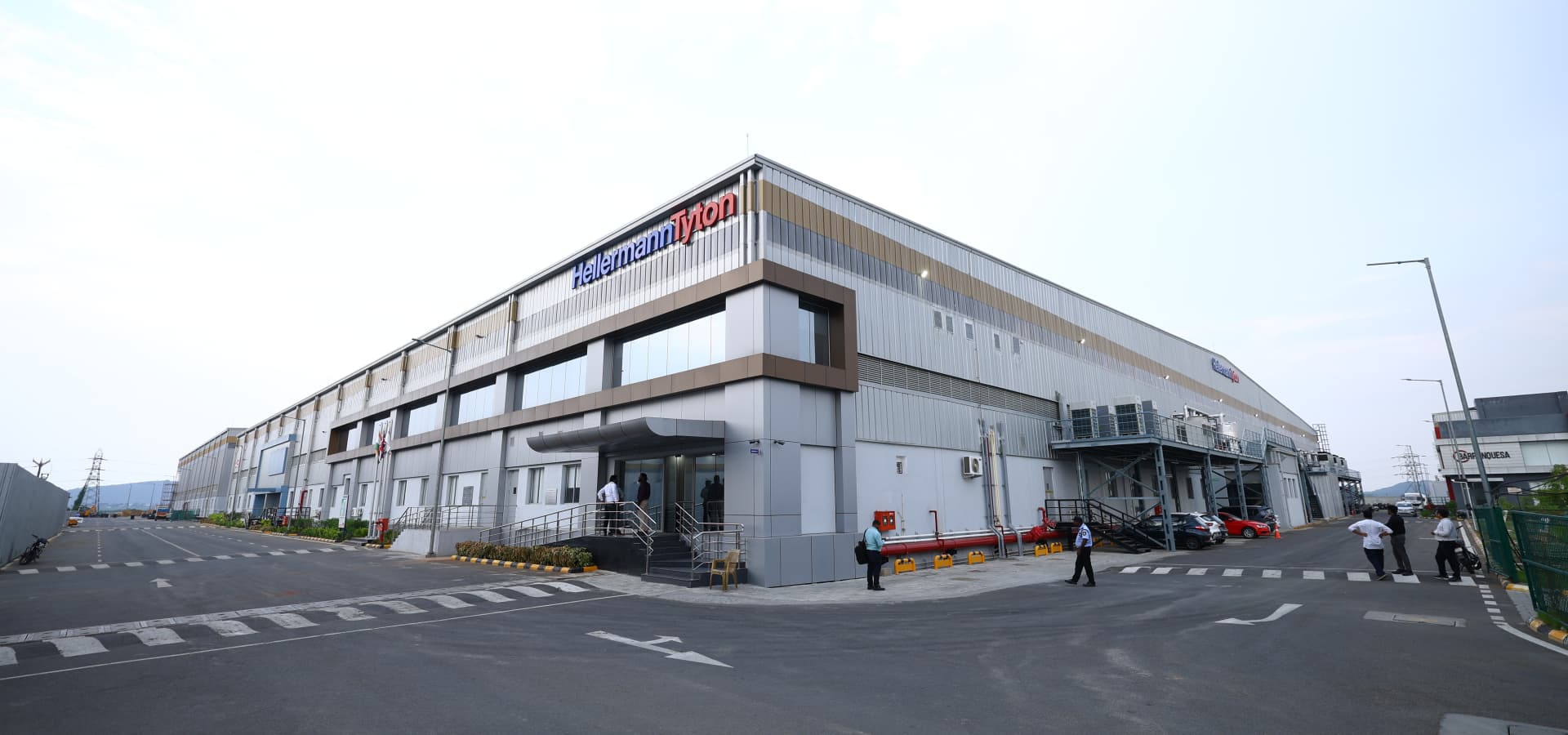
Built-to-Suit Is Not About Buildings. It Is About Business.
Built-to-suit is often understood as customised construction. Greenbase 2.0 takes a broader view: it is customised business infrastructure.
A manufacturing or logistics facility performs only when its design reflects the processes that happen inside it. Material movement, internal circulation, bay planning, clear heights, utilities, safety systems, dock configuration, worker movement and future expansion all need to work together.
Greenbase Industrial and Logistics Parks delivery model begins with discovery. Business requirements, operational flow and expansion needs are studied first. The next stage is design, where facility logic, utilities and safety are aligned. Development then follows with time-bound execution discipline, before testing, documentation and handover. The relationship continues through facilities support and lifecycle value.
This Discover–Design–Develop–Deliver–Drive approach is central to Greenbase 2.0.
The objective is not merely to construct a facility to specification. It is to create an industrial asset that makes operational sense from day one and remains relevant as the occupier grows.
Greenbase’s solutions span built-to-suit industrial facilities, warehouse developments, plug-and-play facilities and cold storage. This allows enterprises to select a development model aligned with their operational and capital priorities.
For decision-makers evaluating industrial and logistics parks in India, the key question is no longer, “How much space is available?” It is, “How effectively can this space support our business?”
Greenbase 2.0 is built around that question. Customisation is not treated as an architectural preference. It is treated as a tool for productivity, resilience and long-term scalability.
That mindset can also improve decision-making before capital is committed, because design choices are evaluated against actual operating requirements rather than generic assumptions.